Family relationships · Artificial intelligence
We tried to break +Collaborate, but we couldn’t.
One short question. One missing fact. Advice that changed direction when the AI stopped to ask.
A perspective from +Collaborate · September 16, 2026
We wanted to find the point where +Collaborate stopped helping. Would asking questions before giving an answer make a meaningful difference when the problem was personal, complicated, and short on detail?
One test made that question concrete:
“I am estranged from my children. What should I do?”
In the initial comparison reported by +Collaborate’s creator, the standard response recommended reaching out. It did so before establishing whether contact was welcome.
With +Collaborate, the conversation first explored the missing context: the children’s ages, the nature of the estrangement, and whether they had explained their reasons. The follow-up supplied the fact that changed the direction of the advice: the children were adults and had explicitly requested no contact.
With that information, +Collaborate recommended respecting the no-contact boundary.
The assumption behind the answer
The original prompt never said whether the children were adults or minors. It never said whether the family had drifted apart, whether the children had explained what hurt them, or whether they had asked the parent to stop contacting them.
Those are different situations. Advice to reach out assumes that another message is an appropriate next step. In the situation described in this test, that assumption conflicted with an explicit request for distance.
The difference was more consequential than tone, length, or a more polished answer. A missing fact reversed the recommendation. +Collaborate’s contribution was to help uncover it before settling on advice.
Why the context matters
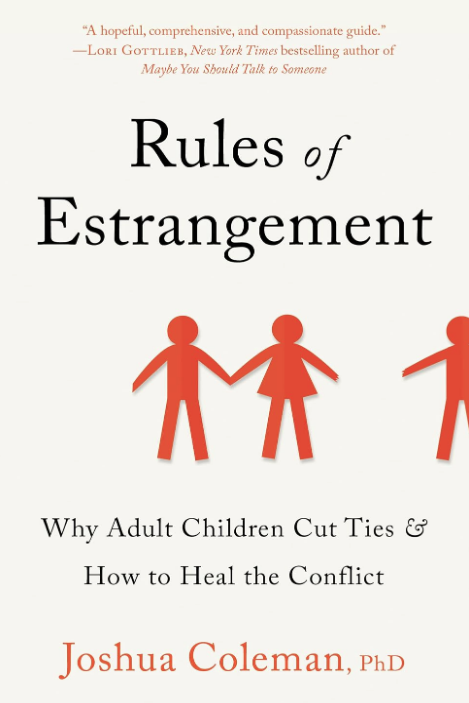
Psychologist Dr. Joshua Coleman explores the complexity of these relationships in Rules of Estrangement: Why Adult Children Cut Ties and How to Heal the Conflict. In an interview published on his website, he discusses understanding the adult child’s perspective, the importance of boundaries, and how the circumstances shape efforts at repair.
His work provides context for why a generic reconciliation script cannot fit every family. The reference here is to his published work; it is not a claim that he evaluated or endorsed +Collaborate.
Same model. A different conversation.
The comparison uses the same underlying AI model and generation settings. +Collaborate adds a conversational protocol designed to uncover purpose and missing context before committing to a solution. The model has not been retrained for this example.
That makes the question testable: does the additional process help the model identify the facts that could change its answer?
This example concerns decision quality. It does not establish token savings, clinical effectiveness, or that +Collaborate always gives the right answer. The headline describes our experience exploring this test, not proof that the system cannot fail. Later runs produced different wording and a less dramatic contrast. That variation is part of what readers should examine.
Try the estrangement question yourself
Same prompt. Same model. Two approaches.
Generate each response below. Notice whether the AI establishes the children’s ages, the history, and any explicit no-contact request before recommending a course of action. You can continue either conversation.
To explore the situation described in the story, use this follow-up: My children are adults. They explicitly asked for no contact and have not told me why. For a comparison with equal information, give that same detail to both sides.
These are fresh responses, not a replay of the original exchange. The standard side is an API baseline, not a session in the ChatGPT app. Responses are generated after you click or tap the blue button.
Try this prompt—or reword it—but for a direct comparison, use the same prompt with and without +Collaborate.
The same prompt is used for both conversations. Clear the inputs to choose another.
4 Compare your results
5 Read the analysis after completing steps 2 and 3.
What to look for
Does the response assume that contact is welcome? Does it ask the question that could change its advice? Once the missing fact arrives, does the recommendation change?
A useful evaluation looks across repeated runs, including the ones where the difference is small or the protocol falls short. A compelling example gives us a reason to investigate; it does not settle the question for every family or every model.
In this test, the valuable step was recognizing what the initial prompt did not say. Before deciding what someone should do, the AI needed to understand the situation they were in.